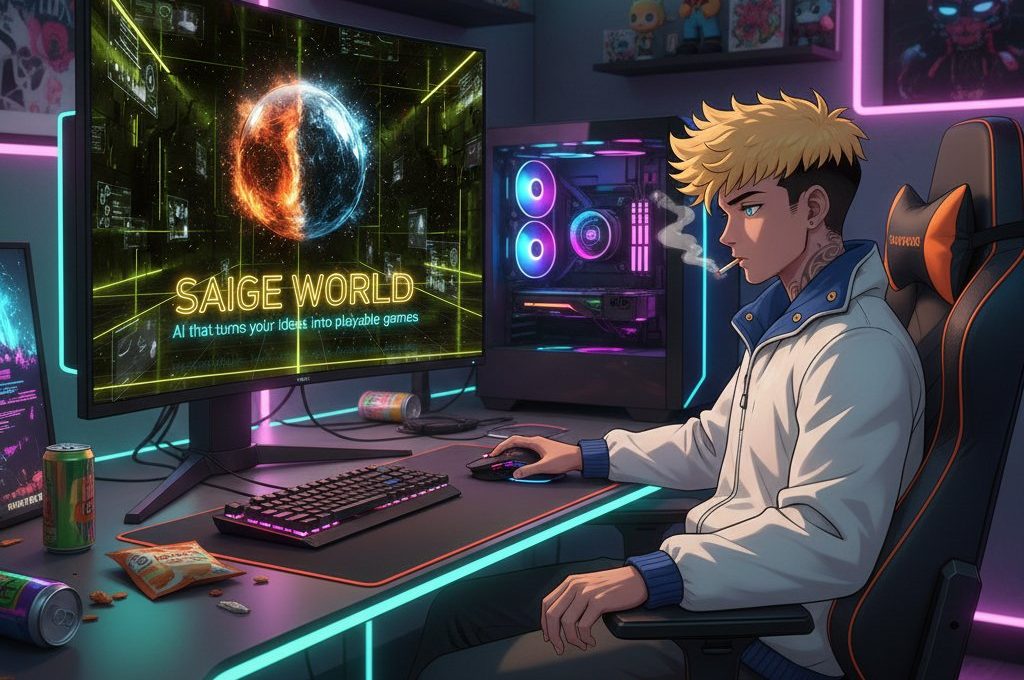

🧵 Saige World is quietly building one of the most important shifts in Web3 gaming
Most people see AI in gaming and think of visuals or character generation.
Saige World takes a different route.
They’re using AI to remove the biggest blocker stopping new creators from ever building a game.
It sounds simple on the surface, but the implications run deep.
➥ 1. Creativity has always been trapped behind technical walls
To build a game, you need:
coding, design, systems thinking, asset creation, sound, balancing, and an understanding of how economies work.
One missing skill can kill the entire idea before it even starts.
Saige breaks that wall.
You describe the game you imagine.
AI handles the logic, rules, flow, and structure with surprising precision.
➥ 2. It’s more than “no code.” It’s no friction.
People underestimate how powerful it is when a creator only has to focus on the idea itself.
No technical detours.
Just imagination → execution.
And in Web3, this changes everything.
➥ 3. Every game becomes its own micro-economy
This is the part that makes Saige stand out.
When a game is generated, it doesn’t just exist as a playable experience.
It launches with:
➥ its own token
➥ its own reward cycle
➥ its own leaderboard
➥ its own play-to-earn structure
➥ its own trading fees
The creator earns when players engage.
Players earn based on holding the game’s token.
It’s a system where both sides reinforce each other.
➥ 4. The Base network makes this smoother
A creator economy needs speed, low fees, and reliability.
Base provides that foundation.
It removes the lag and cost barriers that ruin most on-chain games.
The result is gameplay that feels closer to Web2 speed, with Web3 ownership layered on top.
➥ 5. Thousands of small games > One big game
This is the future Saige is leaning toward.
Not one massive metaverse.
Not one giant title.
Instead:
➥ fast experimentation
➥ niche communities
➥ micro-economies
➥ ideas that only need minutes to test
➥ creators who don’t need permission or funding
This is how real ecosystems grow.
➥ 6. The player loop becomes healthier
Old P2E systems failed because they depended on constant new buyers.
Saige tries a different path:
➥ hold-to-earn
➥ fee sharing
➥ deflationary mechanics
➥ skill-based leaderboard rewards
It filters out farming behavior and rewards genuine participation.
➥ 7. The long-term vision is even bigger
Saige hints at:
➥ APIs that connect their games to other platforms
➥ social integrations
➥ creator libraries
➥ multiplayer modes
➥ VR and 3D down the line
If they execute even half of this, we’re looking at a system that evolves fast.
➥ 8. Why I’m paying attention
Web3 gaming has struggled because building a game is hard.
Good ideas die before they even get a prototype.
Saige World is removing the bottleneck at the exact place it matters.
And if a tool removes friction, it unlocks creativity.
When creativity opens, ecosystems grow.
➥ 9. My plan next
I’ll keep exploring Saige deeper and share the parts I find most interesting.
When a platform lowers the barrier for new builders, I always watch closely.
It usually signals the beginning of a new wave.
And in this case, it might be a wave powered by thousands of small creators instead of a few big studios.
End.
If you’ve been sleeping on Saige World, now’s a good time to look closer.
Source by Mikey.hl