
Blockchain and the Future of the Gaming Industry
The convergence of blockchain and the gaming industry is facilitating a promising transformation in this sector. In today’s article, we will trace the history of over 70 years of gaming development, from its early stages to the present day, to explore the role and impact of blockchain technology in this field.
1950s: The First Gaming Console
In the early 1950s, video games were not yet a common term. A significant step was the creation of the first electronic gaming console by scientist William Higinbotham in 1958 at the Brookhaven National Laboratory in the USA. This console, named “Tennis for Two,” used a CRT screen to display a simple tennis game. Players interacted with the game using a controller. However, this gaming console was only an experimental project and did not see widespread development or public adoption.
During this period, gaming consoles were mainly products of research groups and universities. They were often used in laboratories and special events.
1970s: The Rise of Computer Games
The 1970s witnessed a significant breakthrough in video games as developers focused on creating games for personal computers. The first game, Pong, by Atari in 1972, triggered a craze for black-and-white screen games. They successfully transitioned video games from laboratories to the hands of players outside specialized communities.
The diversification of video games began, ranging from simple games like Space Invaders to complex genres like role-playing games. Personal computers quickly became the target for gaming industry innovation, laying the foundation for the extensive development of the industry in the following years.
1980s: The Golden Age of Arcade and Console
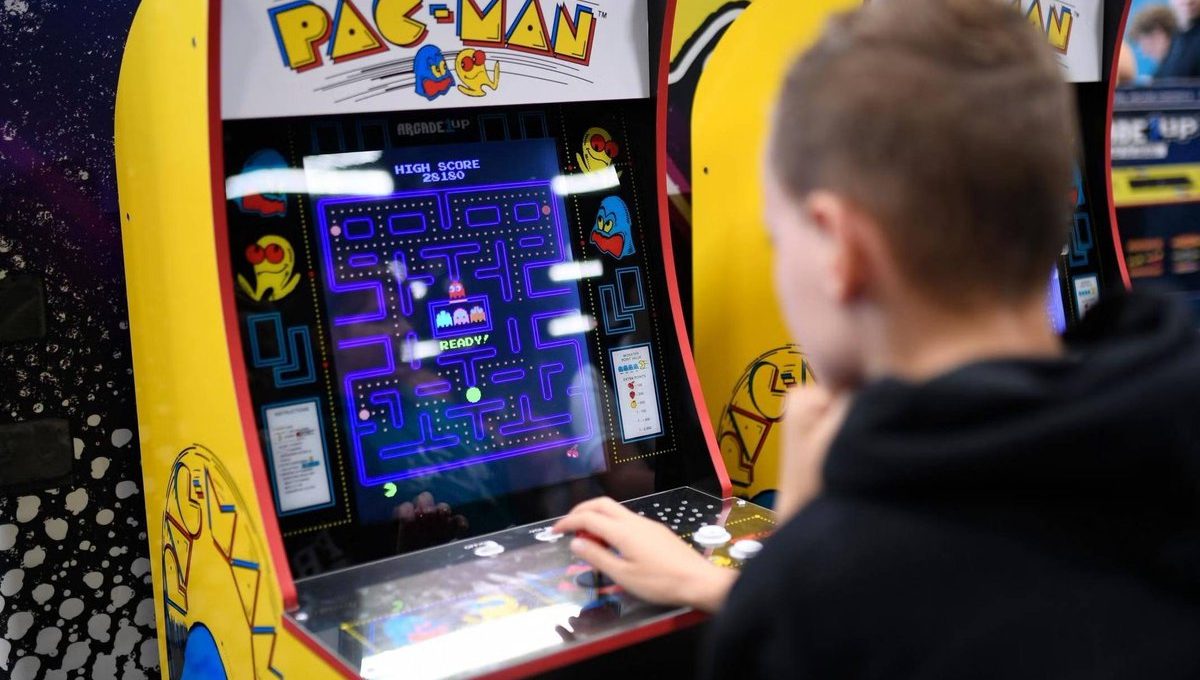
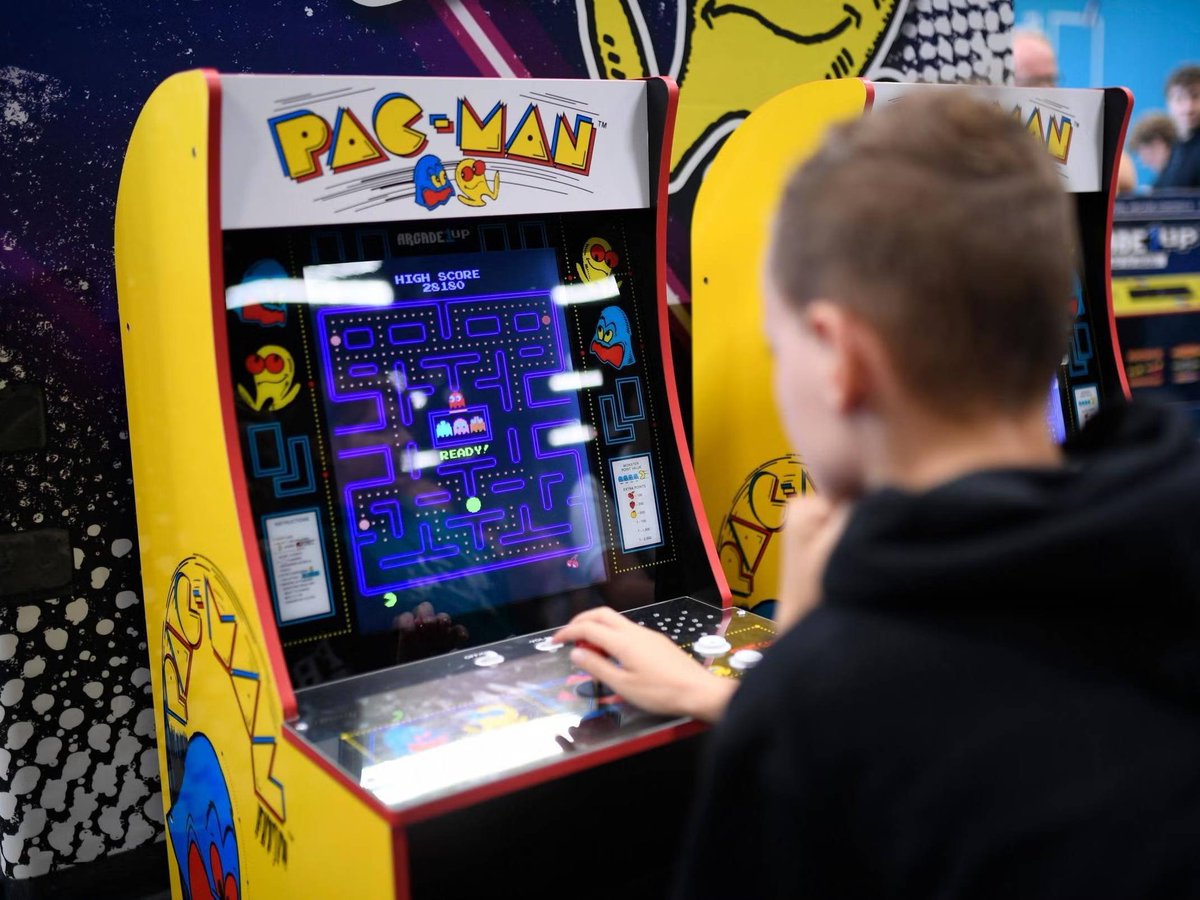
This era marked the vibrant period of gaming culture as electronic entertainment centers, or arcades, became popular destinations. Games like Pac-Man and Donkey Kong became global phenomena, fueling competition among game developers.
Additionally, the emergence of gaming consoles such as Nintendo Entertainment System (NES) and Sega Master System provided a unique gaming experience at home. The 1980s were the golden age of arcades and consoles, featuring significant breakthroughs in design and graphics, setting the stage for the comprehensive development of the gaming industry.
1990s: The Rise of 3D and Exclusive Console Games
In the 1990s, there was a graphics breakthrough with 3D technology in video games, accompanied by fierce competition among console manufacturers for exclusivity.
3D technology opened up a new world of vivid graphics. Sony’s PlayStation and Nintendo’s Nintendo 64 brought unique 3D experiences, with titles like Super Mario 64, The Legend of Zelda: Ocarina of Time, and Final Fantasy VI becoming iconic. These trends not only changed how the community perceived video games but also set new standards for graphics, gameplay, and storytelling.
2000s: The Growth of Online Gaming
During this period, the internet opened the door to a multiplayer world, where players could interact and compete with each other online. Massively Multiplayer Online (MMO) games like World of Warcraft became a phenomenon with millions of players participating. Platforms like Xbox Live and PlayStation Network facilitated robust multiplayer experiences, connecting gamers worldwide.
Alongside the growth of online gaming, creative game design flourished, giving rise to a powerful gaming community. This decade was not just about playing games but also about connecting and sharing experiences in a global community.
2010s: Cloud Gaming and Virtual Reality
In the 2010s, the gaming industry took another technological leap forward. The trends of virtual reality (VR) gaming and cloud gaming gained more attention.
Cloud gaming eliminated barriers related to computer specifications, allowing players to experience games without owning high-end hardware. Services like Google Stadia and Microsoft xCloud provided convenience and flexibility, opening up a new world of digital entertainment.
Virtual reality elevated the gaming experience to new heights, creating an immersive interactive environment. Devices like Oculus Rift and HTC Vive pioneered immersive virtual worlds with realistic graphics.
2020s and Beyond: Blockchain Games and the Metaverse
While Crypto Kitties is known as the first blockchain game, Axie Infinity has set a historic milestone for the modern gaming industry. It has changed the community’s perception of ownership. Through blockchain technology, ownership of in-game assets now shifts from the developer to the player, opening up economic models that allow players to earn income while playing.
If virtual reality in the 2010s enhanced our experience in a specific gaming space, the concept of the Metaverse refers to a vast simulated world where all players can join and interact with each other. It is not just about gaming but also a precursor to building and experiencing virtual life.
Blockchain and the Future of the Gaming Industry
The COVID-19 pandemic profoundly changed our daily lives for an extended period. Masks, sanitizers, and test kits will be unforgettable memories for a generation.
For Web3 citizens, another memorable experience during those days is the emergence of Play to Earn. The days of being “locked down” somewhat created conditions for the explosive growth of the “earn while playing” movement, which later became known as blockchain gaming.
In the following sections, we will delve into the details of Blockchain Games and their role in the future of the gaming industry.
What are Blockchain Games?
Blockchain Games are defined as games that utilize blockchain technology either partially or entirely to store data and process game logic.
The most significant difference between blockchain games and traditional games lies in ownership. In traditional games, all game resources and even user account management belong to the development unit, while blockchain games allow players to truly own them, creating economic models that help players earn money.
Characteristics of Blockchain Games:
Ownership and Self-Custody:Items and resources you own in the game are assets you manage and own. No one will help you recover assets if transferred or lost.
Decentralization and Immutability:The blockchain network ensures the decentralization and immutability of your assets, ensuring that your assets are secure and under your control.
Transparency:All information on the blockchain is transparent, accessible, and verifiable by anyone. It ensures that developers cannot engage in any ambiguous practices with your assets.
Economic Value:You can participate in a free-market trading platform with the items you own without needing permission from a third party.
Classification of Blockchain Games:Based on the degree of blockchain technology integration, blockchain games are divided into two main types:
Semi On-Chain Games:Use blockchain to store some critical economic resources such as currency, characters, and equipment.
Fully On-Chain Games (FOCG):Use blockchain to store resources and process game logic.
The comparison table below will help you understand the difference between traditional games and blockchain games.
Each type of blockchain game has its own pros and cons, but fully on-chain games seem to be the next destination for blockchain games due to the favorable qualities they offer. Scalability solutions such as Layer 2 and new-generation blockchains will catalyze this development.
Current State and Future of Blockchain Games
The First Beta Testing Phase
The dazzling success of Play to Earn during the GameFi season of 2021 made gamers and developers realize the incredible values that blockchain brings to the gaming industry.
At its peak, the popular blockchain game Axie Infinity reached 2.8 million daily users with in-game item transactions exceeding $4 billion. The project’s market capitalization even surpassed $10 billion in November 2021.
Although the Play to Earn wave exploded strongly, the sustainability of the economic model remains an unanswered question. After the glorious period, the prices of in-game items and tokens of most Play to Earn projects experienced uncontrollable declines, similar to the phenomenon seen in the broader cryptocurrency market.
Changes for Development
The beta testing phase of the blockchain game market during the explosive GameFi season of 2021 left profound lessons for both the community and developers. Change is necessary for this puzzle piece to continue its upward trajectory.
The next generations of blockchain games are gradually shifting the focus away from excessive “earn” factors that resemble Ponzi schemes and moving towards emphasizing the gaming experience. Quick money models like “click to earn” are evolving into “skill to earn,” where players need to use more skills during the gameplay to earn rewards.
During this phase, we are also witnessing the introduction of many AAA-quality games on the blockchain network. Notable names include Illuvium, ZepetoX, BigTime, and Delysium.
In addition to content, storyline, and experience, there is a push to elevate social aspects in games. Going back to 2012 with Candy Crush Saga, it is undeniable that the social network was a significant factor in the success of the game. Developers integrated with the Facebook social network, allowing players to help each other earn items and display ranking information, creating an invisible race between groups of friends behind the phone screen.
Current blockchain games are also trying to create a large player community through simple gameplay. One standout name that has recently captured community attention is Pixels on the Ronin network.
It is evident that blockchain games are gradually returning to the core values of traditional games: entertainment and experience, not just earnings.
Interest from Organizations
An interesting aspect is that, despite the ups and downs of GameFi and even as the cryptocurrency market enters a cold winter, the blockchain gaming sector continues to receive attention from major investment funds. This is because the values it seeks to prove have been embraced by the community.
Animoca Brands, a16z, Shima Capital, and Polygon Ventures are actively participating in fundraising rounds for the GameFi sector.
In addition to the active involvement of familiar faces in the crypto market, we are also witnessing the participation of many traditional gaming industry entities.
The CEO of the $36 billion gaming giant Electronic Arts (EA) stated in a speech that blockchain and NFTs are part of the future of the gaming industry.
Epic Games Store, the publisher behind the blockbuster Fortnite, has listed blockchain games on its platform since late 2022.
More recently, Ubisoft, the gaming company behind popular brands like Assassin’s Creed, Far Cry, and Tom Clancy’s, announced a partnership with Immutable to build blockchain games.
Over the past decades, games have taken us through experiences from graphics, gameplay, and storylines to community connections and shared emotions. Now, blockchain is helping us move into the era of games that not only provide experiences but also involve collecting, owning, and participating in an open and free economy.
Conclusion
With the development of blockchain infrastructure, it will take many more years for blockchain games to become widespread in the gaming community. This transition could be a historic milestone, forever changing how gamers and society perceive the gaming industry.
Hopefully, the information provided here will give you a broader perspective on the gaming market and blockchain games.
#BlockchainGaming #GameFi #Crypto
Source by Miller Christopher