
The Best, Worst, and Weirdest Terminator Games – In Fast-Forward
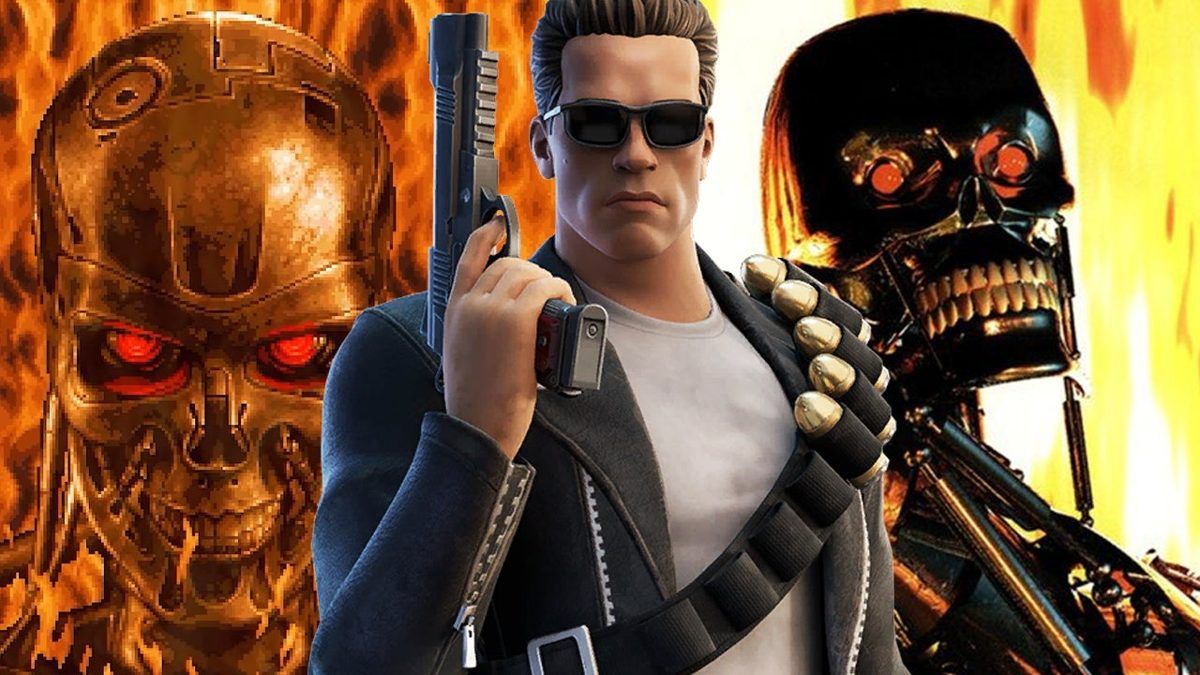
Terminator 2: Judgment Day is beloved as one of the greatest action movies ever made, so of course it inspired decades of video games — some ambitious, some awful, some just downright strange. With Terminator 2D: No Fate aiming to finally deliver a “definitive” T2-style game, IGN’s feature looks back at the long, messy history of Terminator tie-ins across consoles, PC, and even arcades and mobile.
Early Console Chaos: T2 on Game Boy, NES, and 16-Bit
In the early ’90s, studios rushed to adapt T2 before developers had even seen the finished film. Teams worked from scripts and reference material, guessing how scenes would look on-screen.
Ocean Software’s 1991 T2 game (PAL-only) became a famously odd licensed mess — so strange that Eurogamer made a whole video about it.
The Game Boy version tried to cram the movie into a tiny monochrome screen, mixing side-scrolling action, driving stages, and CPU “circuit puzzles” based on a scene that was later cut from the theatrical release.
Developers couldn’t use Arnold Schwarzenegger’s likeness, so the T-800 sprite barely resembled him, causing some accidental comedy.
A 1992 NES/Master System/Game Gear version followed a similar chase-and-shoot structure but added a clever twist: one level forces you to disable enemies non-lethally, mirroring John’s “no killing” rule by making you shoot enemies in the legs instead of outright blasting them.
SNES and Genesis T2 (1993) arrived late and looked dated next to flashier games like Star Fox and Street Fighter II, despite larger environments and side objectives — more “okay tie-in” than classic.
The Arcade Classic: T2 With Big Guns and Bigger One-Liners
In arcades, T2: The Arcade Game (1991) fared much better. It was a cabinet-based, on-rails shooter with mounted light guns, letting one or two players mow down Skynet forces.
The first half takes place in 2029’s future war, the second half in 1990s locations like Cyberdyne and the steel mill.
It used digitized likenesses and audio clips from Arnold Schwarzenegger, Edward Furlong, and Robert Patrick.
Some moments are unintentionally funny — like the T-1000 finally appearing and blandly asking, “Are you John Connor?” before trying to kill him.
The game plays fast and loud, and while not perfect, it became the definitive T2 arcade experience — certainly more iconic than some of its later console cousins.
Bethesda’s Ambitious PC Era: Open Worlds Before Open Worlds
On PC, Terminator games became surprisingly forward-thinking thanks to a then-small studio named Bethesda Softworks.
The Terminator (1991) was based on the first film rather than T2, featuring an enormous, nearly 1:1 recreation of central Los Angeles. You could play as Kyle Reese or the Terminator, roam the city, steal cars, and evade cops — a proto–open world years before GTA and Skyrim.
The Terminator 2029 (1992) narrowed the scope into level-based missions set after Judgment Day, putting the player in a cyber-augmented resistance soldier suit.
The Terminator: Rampage (1993) shrank things even further into a corridor shooter set entirely inside a Cyberdyne facility, but was overshadowed by DOOM’s release.
The Terminator: Future Shock (1995), produced by Todd Howard, was hugely influential:
One of the first PC games to use full 3D environments and mouse-look for aiming and camera control.
Its follow-up, Skynet (1996), improved visuals, added multiplayer, and featured large indoor/outdoor spaces explorable on foot and in vehicles.
After this run, Bethesda shifted fully toward fantasy and The Elder Scrolls, leaving Terminator games behind but taking that ambition with them.
T3 Tie-Ins: Arnold Finally Shows Up (But the Games Disappoint)
With Terminator 3: Rise of the Machines (2003), console games were starting to be treated as serious products for adults, and Arnold’s likeness finally appeared in a game.
Terminator 3: Rise of the Machines (console) leaned heavily on, “Fight as Arnold Schwarzenegger!” in marketing, but players found buggy gameplay, weak AI, and poor graphics.
Terminator 3: War of the Machines (PC) tried a multiplayer battlefield-style approach but suffered from sloppy animations and generally unfinished feel.
The GBA version ended up surprisingly decent — an isometric action game where damage visually revealed the T-850 endoskeleton, and health pickups magically “regrew” skin and clothes in pure video game logic.
Terminator 3: The Redemption (2004) aimed to “redeem” the franchise with more dev time and a larger scope. Critics called it “the best Terminator game yet,” but that was faint praise — solid, but not a game-changer.
Salvation, License Trouble, and Hollywood’s New Game Strategy
For Terminator Salvation (2009), rights holder The Halcyon Company formed its own game studio, Halcyon Games, to ensure the tie-in launched alongside the movie.
The Salvation game looked fine, had plenty of explosions, and was passable as a mid-range shooter, but nothing special.
Christian Bale didn’t lend his likeness or voice, so John Connor looked and sounded completely different.
The game’s modest reception underlined a shift: Hollywood was starting to see games as serious, standalone media, not just quick cash-grab merchandise — but making a great game required far more time, money, and expertise than before.
Halcyon went bankrupt two years after the film, and the rights went back into their usual tug-of-war.
Genisys, Dark Fate, and Crossovers Instead of Full Games
By the time Terminator Genisys (2015) arrived, AAA game budgets had ballooned, and no big console/PC tie-in materialized.
The main official game content was Terminator Genisys: Future War, a mobile strategy title with a flashy CGI trailer that oversold its actual gameplay.
Terminator: Dark Fate (2019), pitched as a direct sequel to T2 and meant to kick off yet another trilogy, also didn’t get a proper big-budget game at launch.
Instead, Dark Fate pushed the brand through crossovers:
Gears 5: T-800 and Sarah Connor skins as pre-order bonuses.
Ghost Recon Breakpoint: Terminator DLC mode.
Mortal Kombat 11: playable T-800 with full moveset and brutal finishers, later followed by T-1000 in Mortal Kombat 1.
Later appearances in Fortnite and Call of Duty continued the trend: Terminators as guest stars in huge multiplayer sandboxes.
Despite all this synergy, Dark Fate underperformed at the box office, and sequel plans evaporated.
Terminator: Resistance and Teyon’s Redemption Arc
In a twist worthy of the franchise’s time-travel plots, one of the more respected Terminator games arrived with little fanfare and no movie tie-in: Terminator: Resistance (2019), from Teyon — the studio behind the notoriously bad Rambo: The Video Game.
Expectations were low, but Resistance turned out to be a surprisingly heartfelt AA shooter/RPG hybrid:
Respectful of the source material and future-war setting.
Included crafting, stealth, sidequests, multiple romance paths, and a story-driven campaign.
Janky and low-budget, but earnest — very much in the spirit of the original 1984 film.
Over time, an enhanced version and DLC expanded the game, and it built a cult following of fans who champion what it does right.
Teyon then followed up with RoboCop: Rogue City, another “better than expected” adaptation that combined chunky action, dark comedy, and deep fan knowledge — further boosting the studio’s reputation for 80s sci-fi licenses.
The Oddest Crossovers: RoboCop, Chess, Wrestling, and More
The Terminator license has wandered into some gloriously weird places:
RoboCop vs. The Terminator (1993): a side-scrolling shooter based on the Dark Horse comics, with incredible music and a “TERMINATOR!” shout in the soundtrack for no reason. A dream candidate for a modern remake, especially now that Teyon has tackled both franchises.
Terminator 2: Chess Wars (1993): a themed chess game, released when chess AI felt futuristic and intimidating.
WWE 2K16: Arnold finally agreed to recreate T2’s iconic biker bar entrance — but in a wrestling game, with WWE superstars as the bikers.
Big Buck Hunter: Reloaded: includes a Terminator mode where, instead of deer, you’re blasting endoskeletons.
What’s Next: Terminator Survivors and 2D Nostalgia
Looking forward, two projects keep the Skynet spirit alive:
Terminator: Survivors: an open-world survival game announced in 2024, focused on scavenging and fighting to survive in a post-judgment-day wasteland. It has been repeatedly delayed, with little clear indication of when it will launch.
Terminator 2D: No Fate: a new 2D game specifically framed as the T2 tie-in fans always wanted, built with modern tools and retro sensibilities — the catalyst for this entire retrospective.
Conclusion
Across three decades of gaming, the Terminator franchise has produced everything from visionary open-world experiments and influential shooters to rushed movie cash-ins and bizarre spin-offs about chess, wrestling, and arcade hunting. If there’s a pattern, it’s this: the best Terminator games come from teams that truly understand and love the source material rather than just racing to meet a film’s release date. With studios like Teyon proving that careful, fan-focused adaptations can work — and with projects like Terminator 2D: No Fate and Terminator: Survivors still on the horizon — there’s still hope that the definitive Terminator game is somewhere in our future… even if the timeline keeps changing.
Source by GamezPoint