
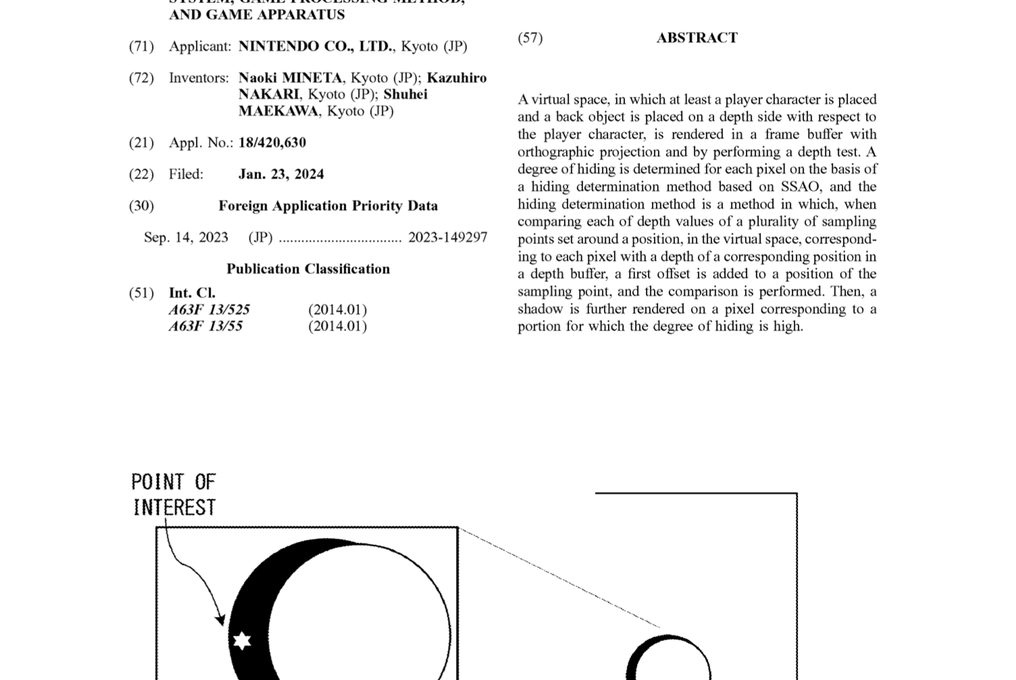
Nintendo’s new patent hints at the possibility of revisiting classic Nintendo games in a 2D HD style. Imagine 2D art set in a 3D world—it would be incredible! Instead of a full remake, we could relive The Legend of Zelda: A Link to the Past in its original 2D glory with enhanced graphics. Stay tuned for more details!
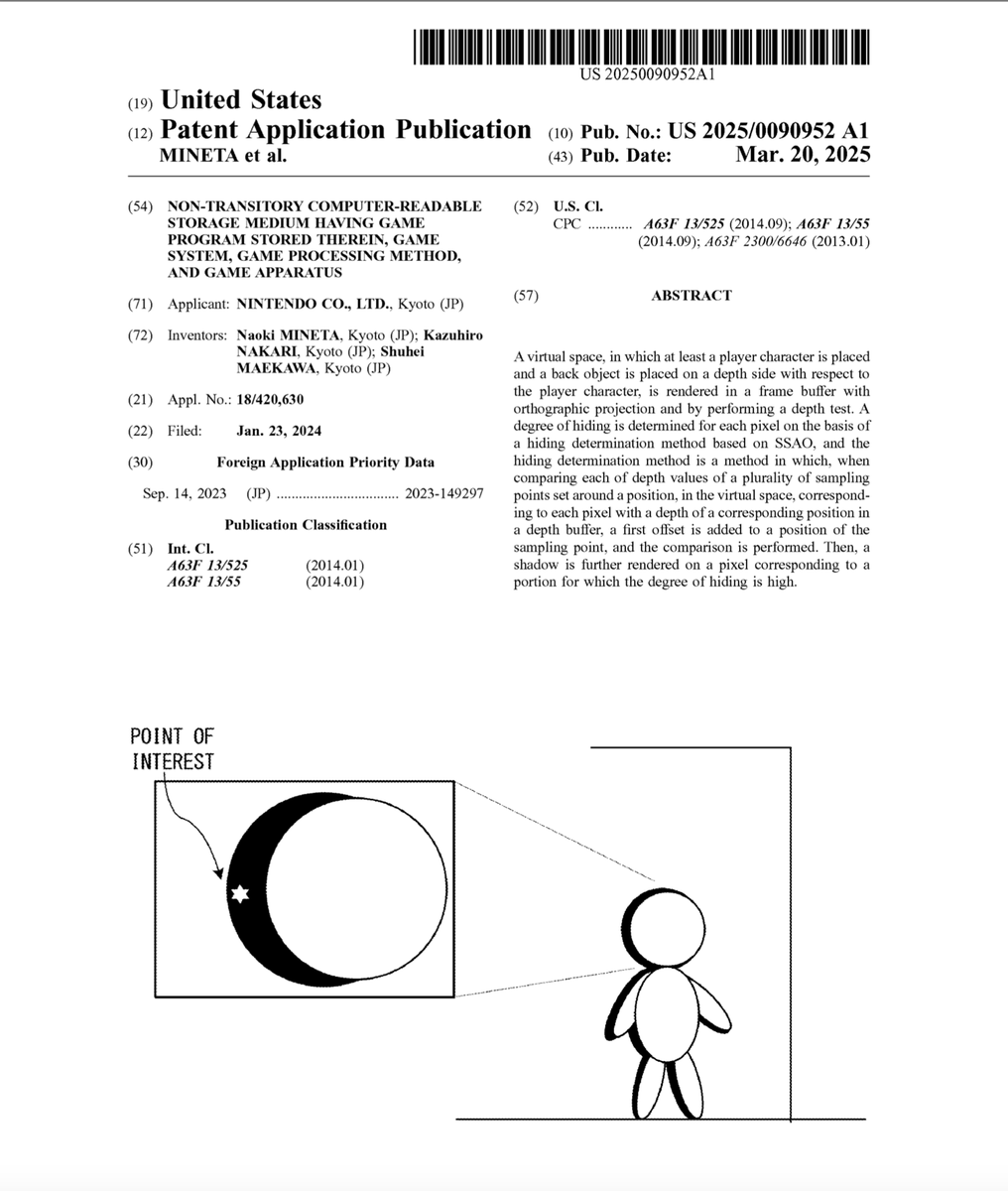
A fresh patent from Nintendo was filed for what could be the Nintendo Switch 2. The document, titled “Non-Transitory Computer-Readable Storage Medium Having Game Program Stored Therein, Game System, Game Processing Method, and Game Apparatus,” was published on March 20, 2025, and it’s all about making 2D-style games look amazing in a 3D virtual world. Let’s break it down step by step so you can see what Nintendo might be cooking up for its next console.
The Big Idea: 2D Vibes in a 3D World
This patent is focused on a game system that uses a 3D virtual space but renders it in a way that feels like a classic 2D game—like a side-scrolling Mario or Metroid title. They’re using a technique called orthographic projection, which flattens the 3D world so there’s no perspective (think flat, like a paper cutout), instead of the usual 3D perspective projection where things get smaller as they get farther away. The goal? To make characters and shadows look crisp and 2D-like, even though they’re built in a 3D engine.
Key Feature 1: Fancy Shadows with SSAO
The star of this patent is how it handles shadows. Nintendo’s tweaking a graphics trick called Screen Space Ambient Occlusion—or SSAO for short. Normally, SSAO figures out where shadows should go by checking how objects block light in a 3D scene. But here, they’re customizing it for that 2D feel.
How It Works: The system looks at every pixel on the screen and checks points around it (called sampling points) to see if something—like a player character—is blocking light. They add a little offset, or shift, to these points toward the light source. This makes shadows bigger and bolder than usual.
Why It’s Cool: This tweak creates thick, solid shadows that stick to background objects (like walls or platforms) behind your character. It’s perfect for a 2D game look—like Mario casting a clean shadow on a wall as he jumps.
Key Feature 2: Ignoring Depth for Shadows
Here’s where it gets interesting. In a normal 3D game, shadows fade if the object casting them is far from the surface they’re on. But in this patent, Nintendo says, “Nope, we’re keeping it simple.” They ignore how far apart things are in the 3D depth direction.
What This Means: Even if a character is technically far from a wall in the 3D space, the shadow still shows up strong on that wall. It makes everything look like it’s on the same flat layer, just like a 2D game.
Example: Imagine two platforms at different depths in a 3D world. With this tech, your character’s shadow hits both platforms the same way, keeping that flat, unified 2D style.
Key Feature 3: No Shadows on Backgrounds
Nintendo adds a clever twist: shadows only show up on “back objects” (like platforms or walls close to the action) and not on distant “background objects” (like the sky or far-off mountains).
How They Do It: They use a mask to block shadows from rendering on the background. So, your character’s shadow sticks to the platform they’re on but doesn’t stretch weirdly onto the horizon.
Why It Matters: This keeps the scene clean and makes the action pop without cluttering the distant visuals, enhancing that 2D vibe with a touch of depth.
Key Feature 4: Flattening 3D Models
The patent also talks about making 3D character models look flatter. They do this by tweaking something called normal vectors—basically, the direction a surface is facing for lighting.
The Trick: They stretch these vectors toward the camera and normalize them (keep their length consistent). This reduces shading and makes the character look less rounded, more like a 2D sprite.
Visual Payoff: Think of Mario looking like a flat cartoon instead of a fully shaded 3D figure, even though he’s built in 3D. It’s subtle but ties the whole 2D aesthetic together.
Key Feature 5: Avoiding Character Overlap
In a 2D-style game, you don’t want characters to look like they’re glitching into each other if they line up. The patent fixes this with a depth test.
How It Works: They add a tiny offset to each character’s depth value so they don’t share the exact same spot in the 3D space. This stops them from blending into one messy blob when viewed flat.
Result: Characters stay distinct, like in a multiplayer Mario game where four players can stand side by side without looking stuck together.
Why This Could Be Switch 2
So, why do we think this is for the Switch 2? First, it’s filed by Nintendo, a company known for evolving its tech with each console. Second, the timing—filed in January 2024, published in March 2025—fits a next-gen development cycle. Third, this focus on blending 2D and 3D perfectly aligns with Nintendo’s history of polished, hybrid game design (think Super Mario 3D Land or Link’s Awakening remake). It’s not just about power; it’s about style and efficiency, which screams Switch evolution.
Wrap-Up: What It Means for Gamers
If this patent makes it into the Switch 2, we could see games that feel like classic 2D titles but run on a modern 3D engine—smooth, sharp, and with those gorgeous, chunky shadows. It’s a way to keep Nintendo’s retro charm while pushing the tech forward.
Source by Mike Odyssey